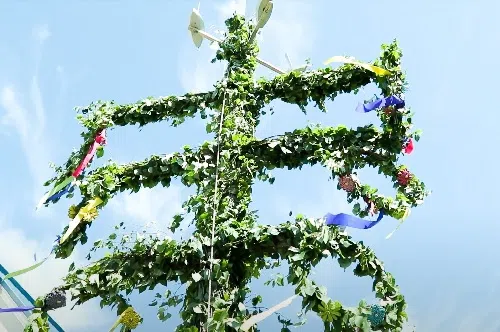
Michigan’s Copper Country attracted many immigrants with jobs in the region’s highly productive mining industry. Most will recognize the Keweenaw Peninsula’s Finnish influence, but may not as easily see the influence other Finno-Ugric communities left behind.
Finno-Ugric people have traveled far across the world to find their homes today. Several communities within the diaspora are located in pockets across the Ural Mountain region, around the Finnish-Russian border and in Hungary.
“We have the Forest Finns, which are Finns that settled in Sweden. And some of them came to this country and were part of the New Sweden colony and were credited for introducing the log cabin to the United States,” said Jim Kurtti, president of Finns and Friends. “There’s people here with that ancestry as well.”
Kurtti explained the diversity extends beyond traditional Finnish heritage.
“In particular in the Copper Country, a lot of people’s roots are in the North. So they’re from the Arctic Finns or the Kvens,” Kurtti said. “We have a representative coming from Northern Norway who’s going to be part of the program. And we have the Sami people, and Sami people are also quite diverse. There are seven existing Sami languages, recognized languages.”
Visit Keweenaw’s Jesse Wiederhold adds there are popular destinations in the region that expand beyond the Copper Country’s Finnish heritage, such as landmarks like the Hungarian Falls.
“These people come from all over, but they’re here. They’re in Hancock. They’re in the Copper Country in the further Upper Peninsula area,” Wiederhold said. “Whether you realize it or not, you’re living like a Finnish person every day. You’re living this Finno-Ugric culture, and it’s just a result of the rich history of having the people even come here and everything they’ve left behind from the mines to pannukakku to Finnish food.”
Another way visitors explore various Finno-Ugric influence in the region starts when travelers stop in to research the Finlandia Archives.
“Our most active genealogical researchers do come back quite often,” said David Maki, executive director of the Finnish American Heritage Center. “Whether it’s genealogy or many of the other opportunities that we provide at the Heritage Center, people are coming to learn more about themselves and those who came before them. We have, for instance, the Finnish-American Folk School that gives people a more personalized, hands-on way of exploring the traditions that their ancestors brought here with them.”
Learn more about Juhannus events and activities coming to Hancock between June 17th and 21st, online. Find more about the city’s designation as the Finno-Ugric capital of culture in 2026 online as well.